
Talk title: Domesticating Seaweeds
Abstract: There has been a great deal of interest in seaweeds over the last 20 years linked to bioenergy, bioplastics and more recently Blue Carbon, in terms of how this form of biomass can potentially address climate change through carbon absorption. But there has been little information on how climate change will affect cultivation and restoration projects. We have identified 3 major challenges linked to climate change: abiotic change; extreme events; and disease. To address these challenges, we have identified 3 opportunities: ‘future-proof’ site selection; advances in breeding and microbiomes; and restorative aquaculture. Selective breeding is being pushed as a solution to some of these issues to enable the seaweed industry to expand and for climate change resilience. But there are major questions to be addressed linked to this, amongst which are: can we learn from agriculture and do we understand enough about macroalgal population genetics; in relation to disease control and how relevant this is to the gene to gene concept; and are we investing enough into biobanks to support selective breeding.

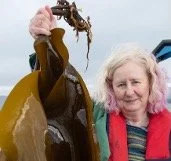
Bio: I am biochemist and molecular biologist originally with a background in terrestrial plants and mycology. I made the move into the marine environment over 30 years ago, 20 of which has been at SAMS, I have been involved in a range of research and commercial projects covering everything from trying to understand the mechanisms of adhesion of Ulva sp zoospores and a member of the assembly consortium of thePhaeodactylum tricornutum genome. Hosting CCAP at SAMS, which contains over 3000 strains of algae and protozoa gives us the leading edge on algal research: encompassing topics from ecology (micro and macro algae biodiversity, harmful algal bloom dynamics, interaction of algae and bacteria & pathogens), biotechnological innovation for green growth (using algae to bioremediate environmental pollutants and plastics, and sequester carbon) and sustainable resources such as high value compounds, materials, fuel and feed stocks to environmental and physical research capacity developing, algae-colour, remote sensing drones and validation of satellite data. This is matched by our extensive expertise in the cultivation, we operate our own seaweed farm, and analysis of both microalgae and seaweed biomass. We are partners in the $13 million NSF funded International Bioeconomy Macroalgal Centre (IBMC) led by the UC Berkeley utilising our long-running experience and capabilities in cultivating and harvesting macroalgae.
Professor Michele Stanley
PI in Applied Phycology SAMS
Dr Dan Smale
Senior Research Fellow
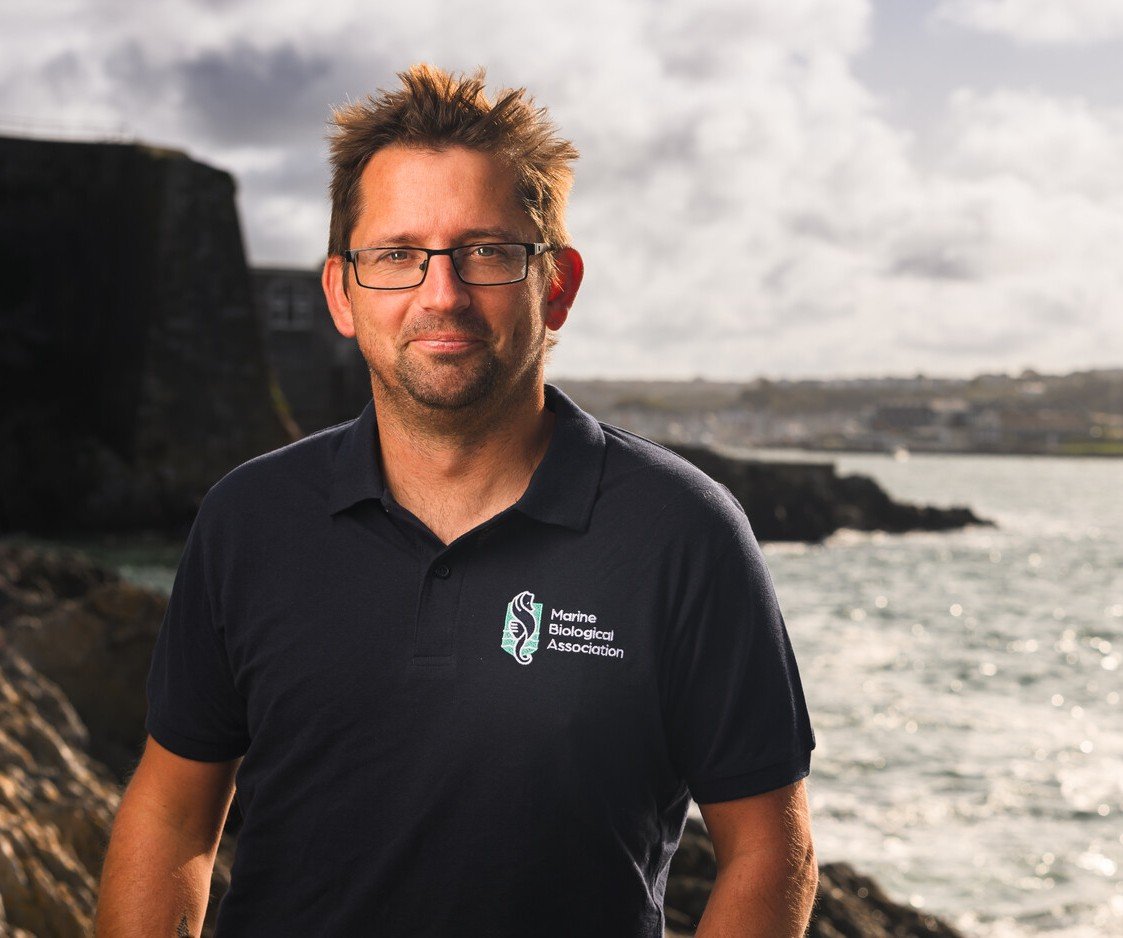
Bio: I am a community ecologist with broad research interests, but a particular focus on how global environmental change is influencing the structure and functioning of coastal marine ecosystems. Our team at the MBA employs a range of approaches, including field surveys, laboratory and mesocosm experiments and modelling techniques, to better understand patterns and drivers of marine biodiversity in rapidly changing world. I have studied coastal habitats such as kelp forests and fucoid beds for over 20 years across Australia, South America, Antarctica and Europe. Our research has demonstrated (i) the importance of kelps as habitat-forming species and determinants of local biodiversity, (ii) the responses of kelp forest communities to both long-term gradual climate change and extreme climatic events, and (iii) patterns and drivers of kelp forest structure and productivity in the UK. More recently, we have worked with local industry to support the sustainable development of the UK seaweed sector, principally by quantifying the ecological impacts and ecosystem service benefits of kelp farming. I also co-lead an international working group on marine heatwaves, which are emerging as important drivers of marine ecosystem change and are likely to intensity under anthropogenic climate change.
Talk title: Kelp forest dynamics in a rapidly warming ocean
Abstract: Kelp forests dominate shallow rocky habitats across much of the world’s temperate and polar coastlines. As foundation species, kelps support high levels of primary productivity, magnified secondary productivity, and support highly diverse communities. However, the abundance, performance and distribution of many kelp species are impacted by global change factors, including ocean warming, increased herbivory and decreased coastal water quality. Due to the often inaccessible nature of kelp forests, however, fundamental knowledge gaps pertaining to their structure and functioning is lacking in many regions, hindering management and conservation efforts. Here, I draw on evidence from a biogeographic transition zone in the northeast Atlantic to highlight both stability and shifts in kelp populations and communities, in a region faced with rapid ocean warming and intensifying marine heatwaves. Using historical data (up to ~80 years old) combined with contemporary surveys, I show that range centre populations of the dominant kelp Laminaria hyperborea have remained largely stable through time, whereas populations towards the trailing range edge have exhibited some declines. Moreover, the abundances of other kelp species found toward their range edges – in particular Saccharina latissima, Alaria esculenta and Laminaria ochroleuca – have responded in line with recent warming trends. The wider consequences of range shifts and altered abundances for ecosystem structure and functioning have begun to be explored through manipulative experiments and targeted surveys, while approaches to management and restoration during a period of rapid change are under development. While the paradigm of kelp forests as highly dynamic ecosystems does not always hold true, ocean warming and other anthropogenic stressors now threaten the continued persistence and stability of these ecosystems in many regions.
Dr Vincent Laizé,
Senior Researcher
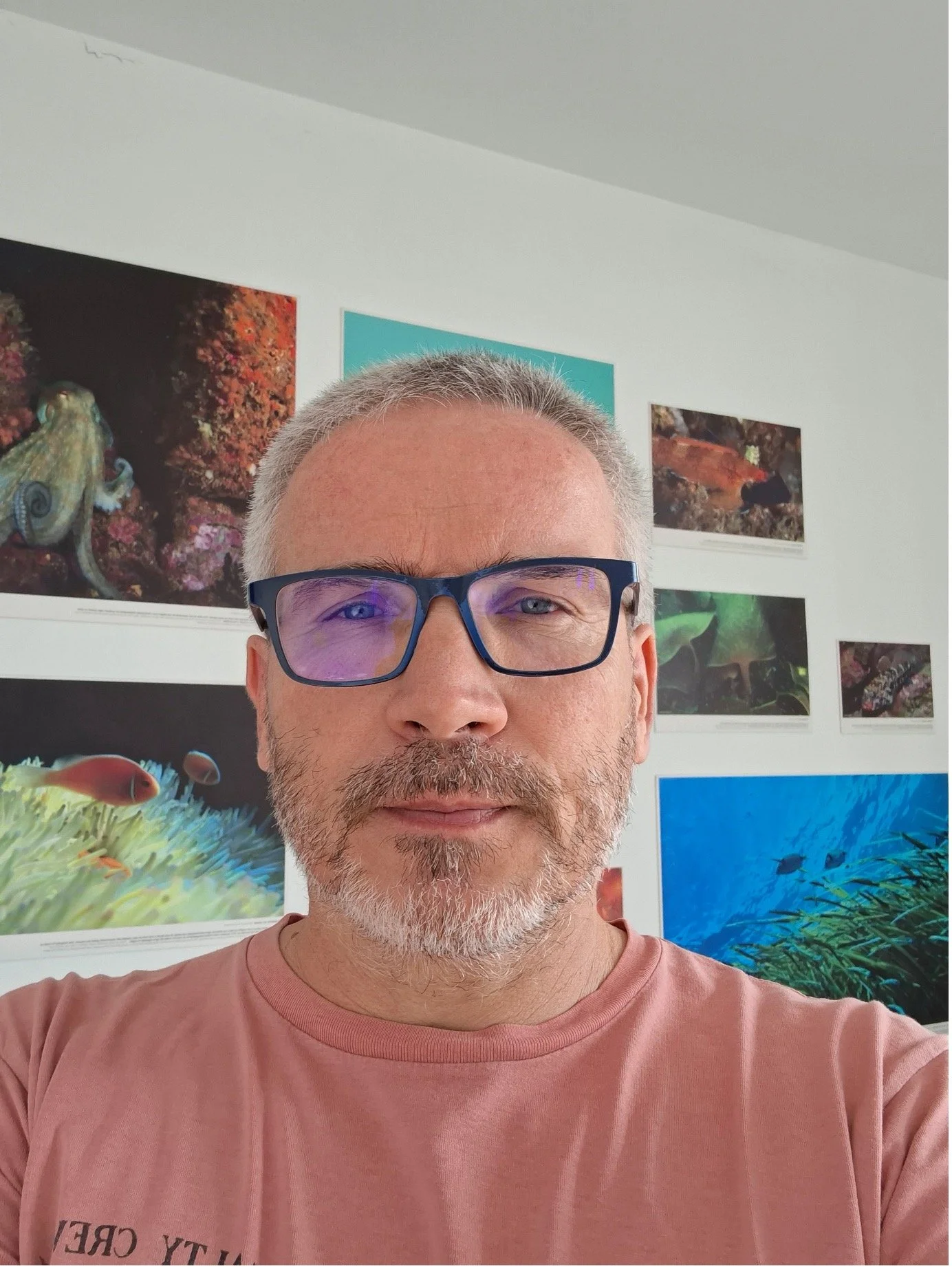

Bio: I am a cell biologist whose research focuses on harnessing cell culture technologies to develop sustainable food production systems. At the Algarve Centre of Marine Sciences (CCMAR), my team develops innovative cellular tools for cellular aquaculture, including fish progenitor cells capable of differentiating into muscle and adipose tissues and microalgae-derived serum designed to replace fetal bovine serum in animal cell culture. Over the past 25 years, I have established and applied fish cell lines to investigate biomineralization, screen marine-derived compounds for osteogenic activity, evaluate chemical osteotoxicity, and, more recently, support the development of cultivated seafood. Our work has demonstrated that microalgae can effectively replace a substantial proportion of animal serum in cell culture media, bioremediate spent culture medium for its subsequent reuse, and enable circular, more sustainable bioprocesses for cultivated seafood production. Through the INOVACEL project, we collaborate with a Portuguese microalgae producer and two collaborative laboratories specializing in algal biotechnology and smart aquaculture to develop scalable microalgae-based solutions for fish cell cultivation, contributing to a more sustainable and resilient food system.
Talk title: Microalgae for circular and sustainable cell-based food production
Abstract: The global food system must undergo a transformative shift to meet the nutritional demands of a growing population while ensuring climate resilience and environmental sustainability. Cell-based foods produced from cultivated animal cells represent a promising alternative to conventional livestock production by reducing pressure on natural resources and lowering the environmental footprint of animal protein production. However, their large-scale implementation remains constrained by the reliance on animal-derived culture media components and the generation of substantial volumes of spent culture medium. We present a circular bioprocess in which microalgae perform two complementary functions to advance cellular agriculture. First, microalgae-derived serum replaces fetal bovine serum in cell culture media, reducing dependence on animal-derived components. Second, spent cell culture medium is valorised as a nutrient source for microalgal cultivation, enabling nutrient recovery, bioremediation, and waste minimisation. Our results demonstrate that fish and mammalian cell lines maintain comparable proliferation rates with up to 75% and 99.6% replacement of fetal bovine serum by microalgae-derived serum, respectively. In parallel, spent cell culture medium effectively supports the growth of freshwater microalgae, confirming its suitability for recycling within an integrated cultivation platform. By coupling animal and microalgal cell cultures, this approach establishes a circular production system in which microalgae simultaneously replace animal-derived culture supplements and recycle spent media. These findings position microalgae as a key enabling technology for the sustainable scale-up of cellular agriculture and the development of next-generation cell-based food production.